
By Emma Curzon, freelance journalist and writer
I was 20 when I first realised I was in love with a girl.
I’d say that it was the moment I realised I was queer, but at that point, the word was barely in my vocabulary. It had never occurred to me that I could be anything other than 100% heterosexual.
Cue months of questioning, soul-searching and googling. I even re-watched The Bold Type, in which the “totally hetero” Kat is shocked to find herself falling for another woman.
But none of it could eradicate the imposter syndrome. I was afraid to enter queer spaces, even online ones because I felt like I didn’t belong.
It’s strangely fitting, though, that The Bold Type – a show about journalists – made such an impression because networking with other queer journalists was a huge help to me.
It was like having a cosy jacket to wear: not overbearing, but enough to feel safe and grounded as I took my first cautious steps into the LGBTQ+ community.
First, there was a journalists’ Zoom meeting, which turned into the cheekily named ‘GAYS R US’ group chat.
Later I found out about the LGBTQ+ Journalism Network and didn’t need much persuading to join.
The stand-out moment, though, was a 2021 Zoom talk called ‘Being an LGBTQ+ Journalist’, led by non-binary journalist Lowie Trevena.
Near the end, sick with nerves, I sent in a question about my experiences. I can’t remember Lowie’s answer word-for-word, but it was something like:
‘Yes, you can still write about queer issues. No, it doesn’t matter that you’re still questioning. No, you’re not a fraud – and yes, you are absolutely “queer enough”.’
I wish I could say this made all my doubts magically disappear, never to be seen again.
In truth, I still needed several more months of research and experimenting, plus a chat with the LGBT Foundation’s helpline. Even now, the insecurities haven’t gone away completely.
Regardless, I feel a lot more comfortable (and proud) openly identifying as a queer woman these days.
And networking with other queer journalists – in spaces where I could ‘talk shop’, yet still be myself – was a vital part of that process.
So if you’re facing similar worries, watch The Bold Type. Secondly, try this feature by Vice’s Rachel Miller, which was eye-opening for me.
Most importantly, remember that who you are – even if you’re still figuring that out – is valid and ok.
Yes, there are some judgemental idiots out there. But there’s also a fabulous community of fellow LGBTQIA+ journalists who can and will support you.
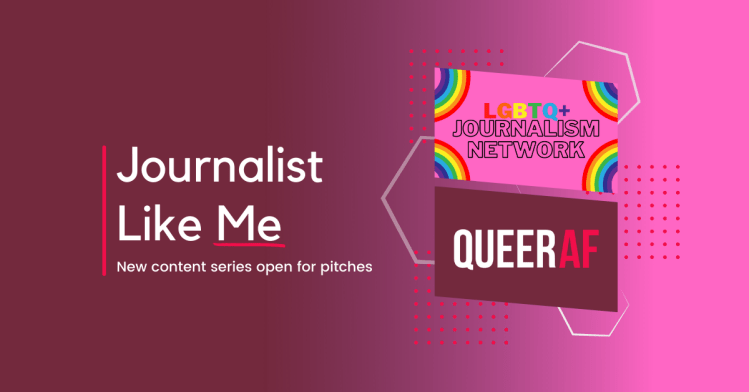
All the details on how to pitch for Journalist Like Me are now available. The joint series in partnership with QueerAF is open to all, from those just starting their career to established queer media professionals who are opening doors for the rest of us.
About LGBTQ+ Journalism Network
The LGBTQ+ Journalism Network is a space for LGBTQ+ journalists across the UK – and at any stage of their career – to find, support and learn from each other. LGBTQ+ journalists have always existed and the network celebrates their work, encourages them and aims to encourage a new generation.
About QueerAF
QueerAF is an independent platform launching the careers of emerging and LGBTQIA+ creatives driven by members, not advertisers. As a not-for-profit publisher, we redirect our funds from our weekly newsletter into helping marginalised queer people build a media career, so they can work in the industry – to change it.

