
By Isabelle Truscott
ICONS and the LGBTQ+ community are often synonymous – so many of people’s favourite characters, celebrities, personalities and activists are part of or have links to the community.
Being a queer icon is an honour, and one many of those with the title still with us today wear proudly.
Icons are those who inspire others, who embody self-acceptance, or have incited change for the community and beyond.
The impact of icons can help many in the LGBTQ+ community feel accepted and seen for who they are.
This year’s LGBT+ history month theme is ‘Behind The Lens’, aimed at highlighting the contributions of queer people to film, cinema and the creative industry as a whole.
It’s no wonder that so many icons can be found in the world of film.
We asked our members to share some of their LGBTQ+ icons, and a number found it hard to pick just one!
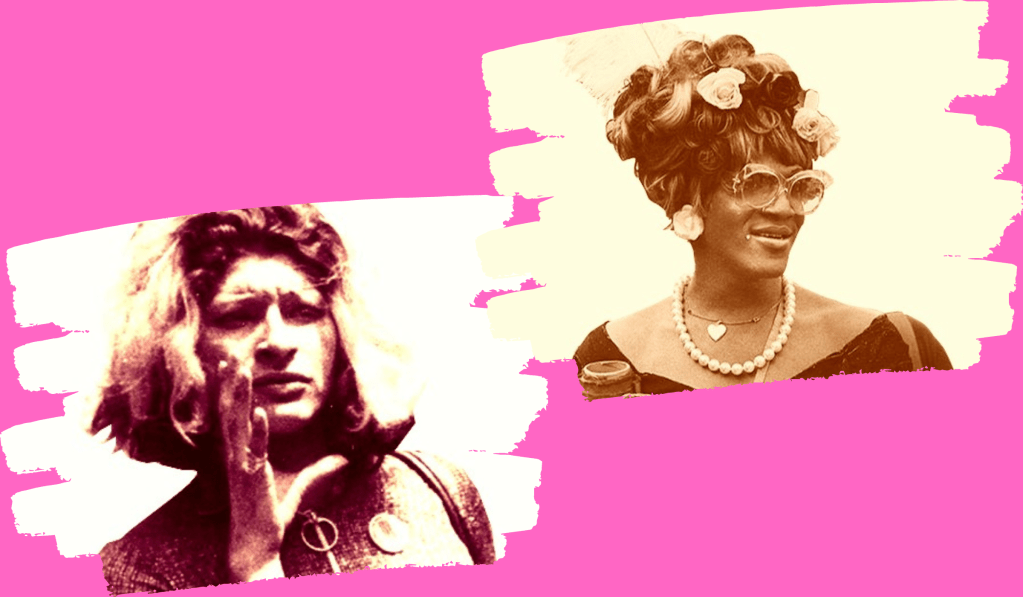
Looking to the world of activism, Saray Haddad highlighted trans-activists, Marsha P. Johnson and Sylvia Rivera.
Both Johnson and Rivera were key figures in the LGBTQ+ rights movement in America in the 60s and 70s, particularly during the Stonewall Riots in New York City in 1969. The pair continued to advocate for the inclusion of trans people, particularly trans people of colour, in the movement, and they set up the Street Transvestite Action Revolutionaries (STAR) in 1971.

Ali Saiedi chose Sir Ian McKellen, George Michael and Madonna as LGBTQ+ icons.
A cinematic and theatrical powerhouse, Sir Ian McKellen is also one of the co-founders of Stonewall UK. Created a year after the discriminatory Section 28 was passed into law under Prime Minister Margaret Thatcher, Stonewall has been a key organisation in changing UK laws to be more inclusive and supporting the LGBTQ+ community.
George Michael was a gay British singer best known for being the lead singer of 80s pop band, Wham!.
Michael passed away on Christmas Day in 2016 at the age of 53 – the same year when fellow LGBTQ+ icons David Bowie and Prince also died.
He celebrated a great deal of success during his career – winning multiple Brit Awards and an Ivor Novello Award – but was also plagued with speculation over his sexuality.
The singer supported a great number of charities – often secretly before his death – including the Terrence Higgins Trust following the death of his partner Anselmo Feleppa to an Aids related illness in 1993. He also donated the royalties of his 1991 duet of Don’t Let the Sun Go Down on Me with Elton John to the Trust.
American singer Madonna has long been an LGBTQ+ icon, especially after the release of her 1990 hit, Vogue.
But before the queen of pop brought the Ballroom scene of Harlem, New York, to the masses, she had been a vocal advocate for awareness and support during the HIV/AIDS crisis.
Madonna’s activism has continued throughout the decades. She notably dressed as a Boy Scout at the 2013 GLAAD Awards to encourage the Boy Scouts of America to allow LGBTQ+ youth to join the organisation and in 2021 she was among a number of celebrities to call out HIV/AIDS misinformation being spread by rapper DaBaby.

Michael Butler’s LGBTQ+ icon is raconteur Quentin Crisp.
“Quentin Crisp, without a doubt the person that introduced me to all things queer when I was 11-years-old!
“He has been my sidekick, my confidante, my muse and my inspiration.
“I never met him, I never spoke to him, but he spoke to me through his stories and his anecdotes and through the TV film The Naked Civil Servant.”
Crisp found fame later in life. He was 59 when he published his first memoir, The Naked Civil Servant (1968), which was later adapted as a film.
Crisp was an eccentric who wore makeup, painted nails and dyed hair as a young 20-something gay man in 1930s London.
He worked as a model, author, raconteur and actor, and often courted controversy with his views on gay liberation and the AIDS crisis.
Are you a member of our online community yet? Why not follow us on Twitter and Instagram? How about you check out our latest news and contributions to Journalist Like Me?
 LGBTQ+ Journalism Network